Getting to know Ranunculus
By: Maggie & Pippa C.
Date: 18 April 2026
What it is
Ranunculus is a big and diverse plant genus that includes more than a thousand species of flowering plants. Most people know them as buttercups, but the group also includes spearworts and water crowfoots. They grow easily in many climates, from cool meadows to mountain slopes and even in shallow water. Because of this wide range, Ranunculus has become one of the most familiar groups of wildflowers around the world.
How it looks
Even though Ranunculus species vary a lot, most share a few common traits. Many have cup-shaped flowers with five glossy petals, usually in bright yellow, though white and pale shades also appear. Some species have small blooms only a couple of centimeters across, while others produce larger, fuller flowers. The leaves can be deeply divided, rounded, or thin and thread-like, depending on the species. Most grow low to the ground, forming soft clusters, but some stretch upward above 50 cm. Plants that live in water develop floating or submerged leaves that look completely different from their land-growing relatives.
Where it is from
Ranunculus is found almost everywhere in the Northern Hemisphere, especially in Europe, Asia, and North America. Many species thrive in cold or temperate regions, often showing up in open meadows, grassy slopes, and wetlands. A number of species have spread far beyond their original ranges and naturalized in new environments, sometimes even becoming common wildflowers in places where they were never originally native.
How to grow it
Growing Ranunculus depends on the species, but most enjoy cool weather, plenty of sunlight, and soil that drains well. They generally appreciate moist but not waterlogged conditions. Gardeners often plant tuberous types in autumn or late winter, giving them enough time to develop roots before the warm season arrives. Regular watering during active growth helps keep the plants healthy, and removing old blooms can encourage more flowers. Some species are better left to naturalize, slowly spreading to create bright patches over the years.
What it is used for
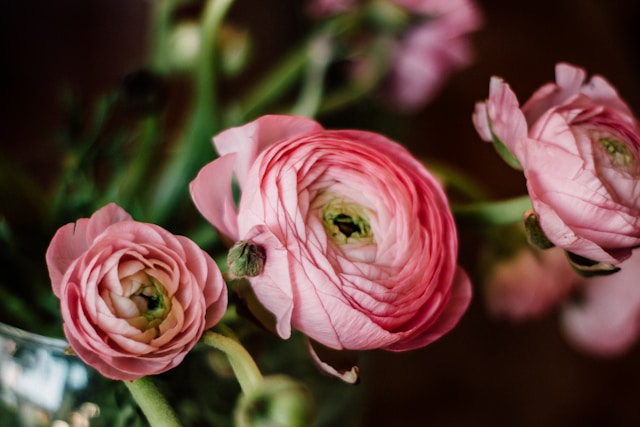
Ranunculus has been valued mostly for its looks. Many species brighten fields and gardens with cheerful spring or early summer color. Some varieties, especially those bred from Mediterranean species, are grown as cut flowers because of their layered, rose-like shape. In the past, a few species were used in traditional remedies, though modern gardeners usually grow them purely for ornamental reasons. It is worth noting that most parts of the plant can be irritating if eaten fresh.
Interesting facts
The name "Ranunculus" comes from Latin and roughly means "little frog", likely because many species thrive near wet places where frogs live. Some species create glossy petals due to a special reflective layer that makes them shine in the sunlight. A few water-dwelling Ranunculus species change their leaf shape depending on whether the leaves are submerged or floating. Buttercups are also well known in folklore, especially the childhood game of holding a yellow bloom under the chin to "see if you like butter".